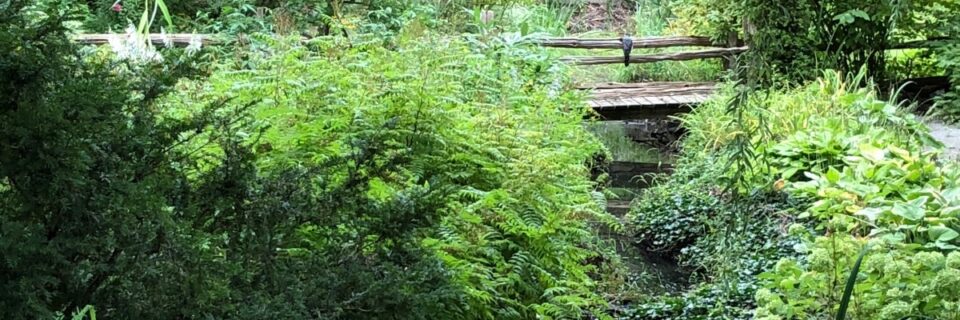
One Mile Creek connects us with nature
In Niagara on the Lake, many private landowners take initiative to cherish our natural heritage. Over the past 20+ years volunteers have helped protect the creek that flows through Old Town.
Plantings in parks help revitalize the watershed
Volunteers plant and maintain native trees and shrubs as well as pollinator gardens in two public parks.
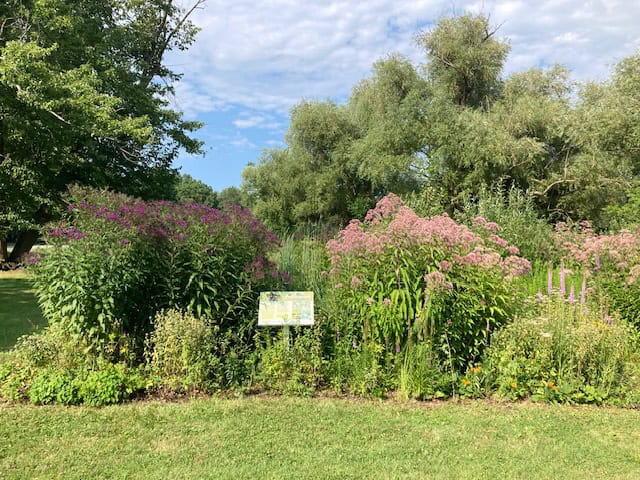
CORNER OF KING & JOHN STREETS
One Mile Creek originates near the Rand property on King Street and crosses John Street along the edge of the Common. In the park at King and John Streets, in 2016 we planted a pollinator garden. In 2020 we added 450 native plants, shrubs and trees.
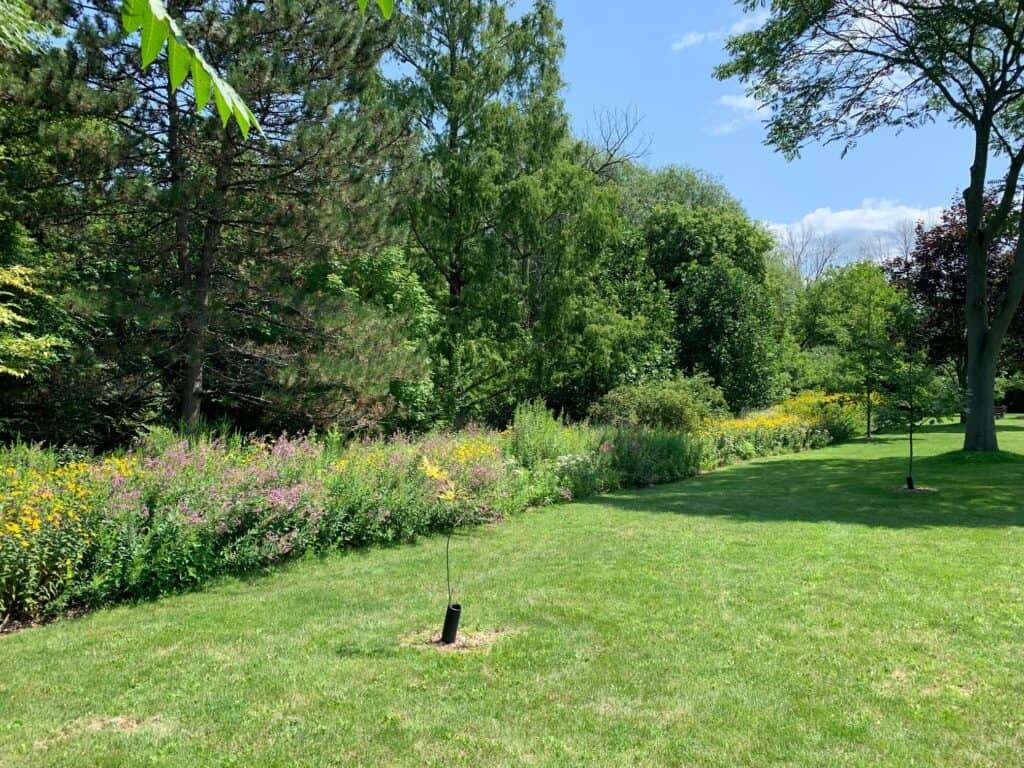
WILLIAM STREET PARK
At the top of the hill abutting One Mile Creek at 433 William Street (behind the pumping station), a group of volunteers led by Gerry Benateau in 2012 created a large buffer/pollinator garden. Today, we enjoy a public park; in the 1940s, it was the Town Dump.
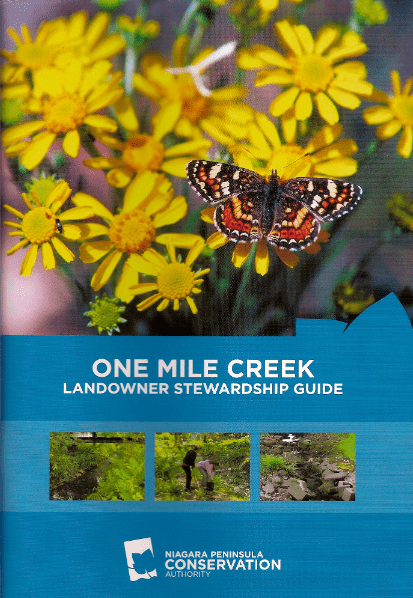
Stewardship Guide available to residents
The Landowner Stewardship Guide was developed especially for residents living within the One Mile Creek watershed in Niagara-on-the-Lake. It provides information about the watershed, how your actions can impact the environment, and gives suggestions for better environmental decision making.